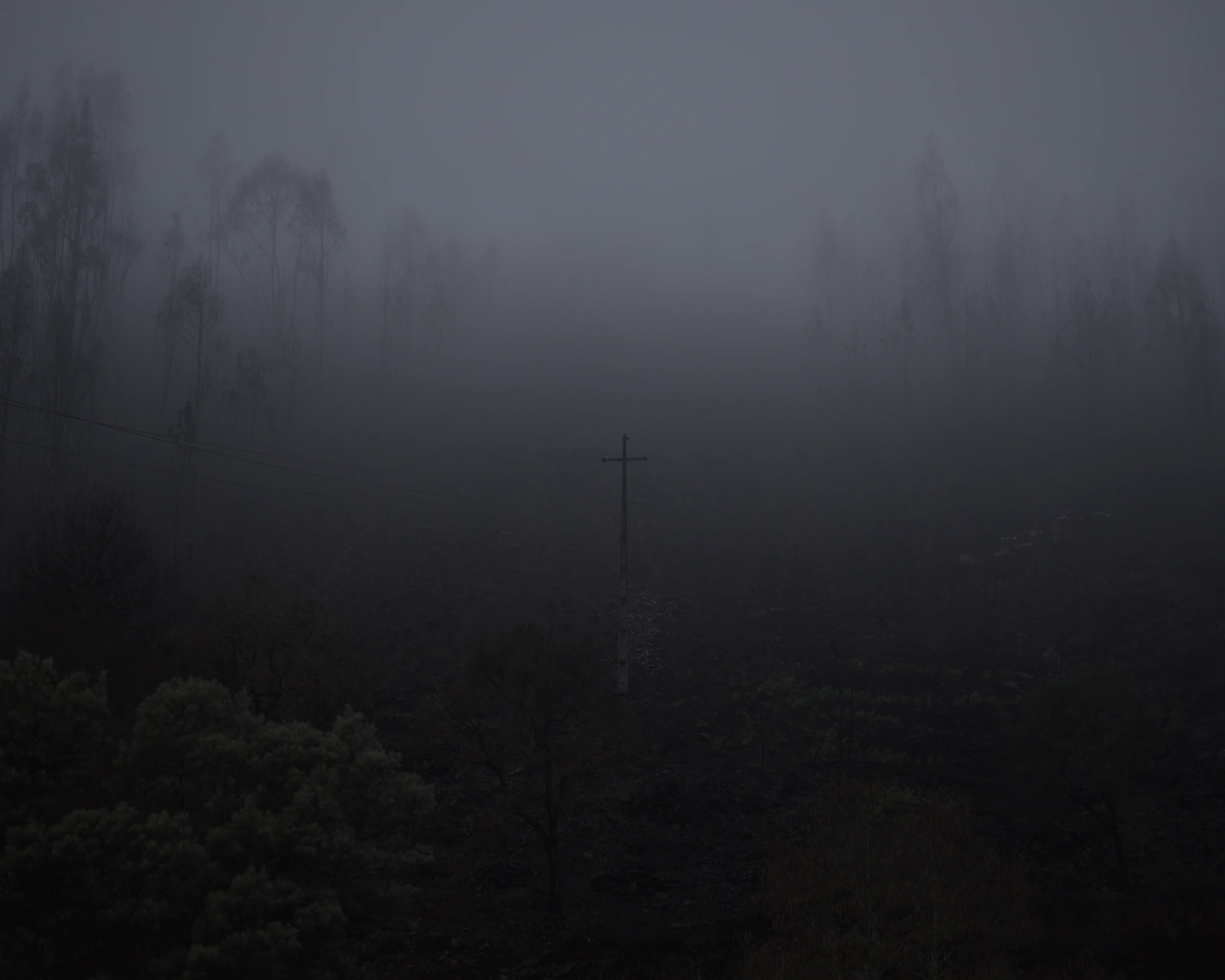
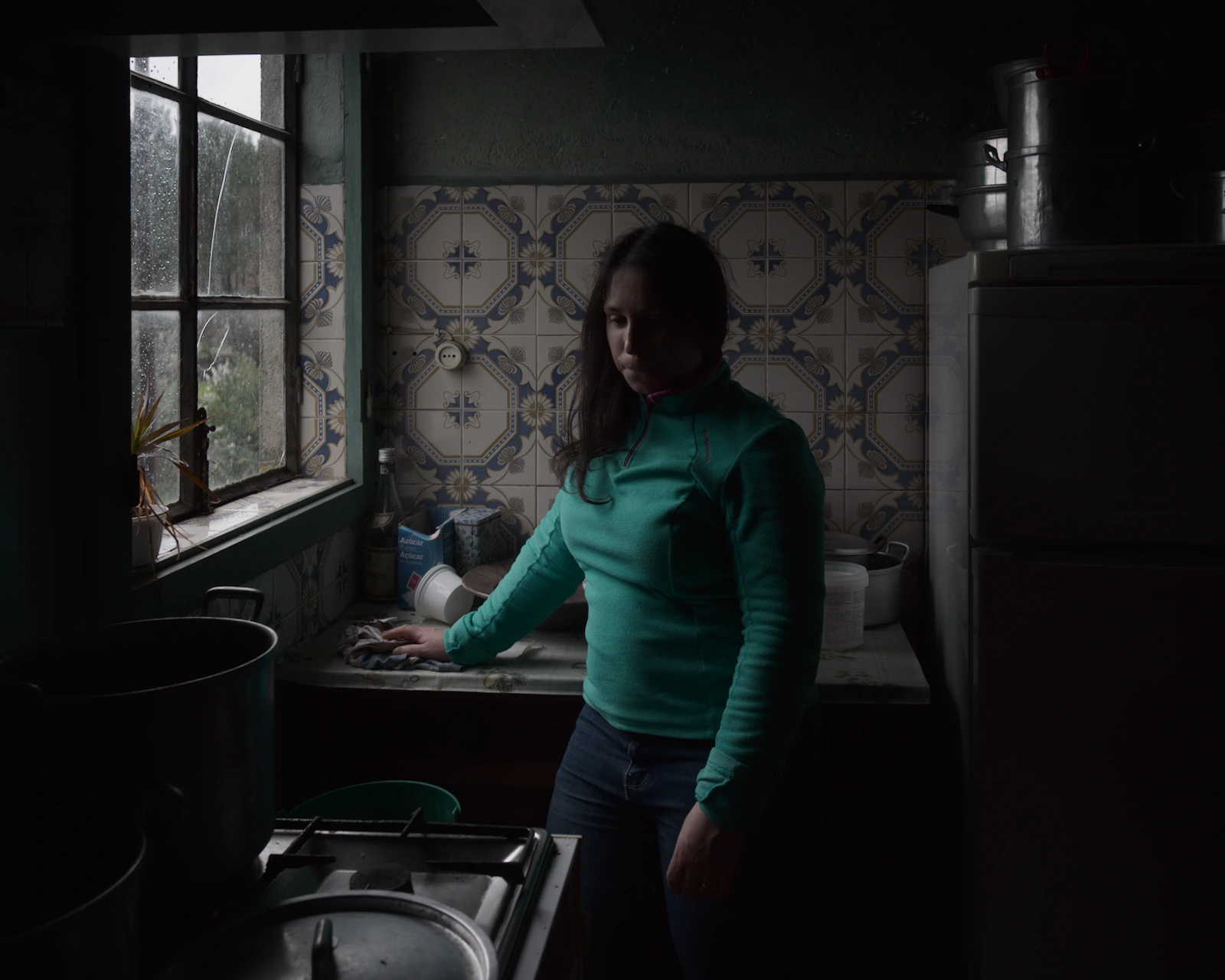
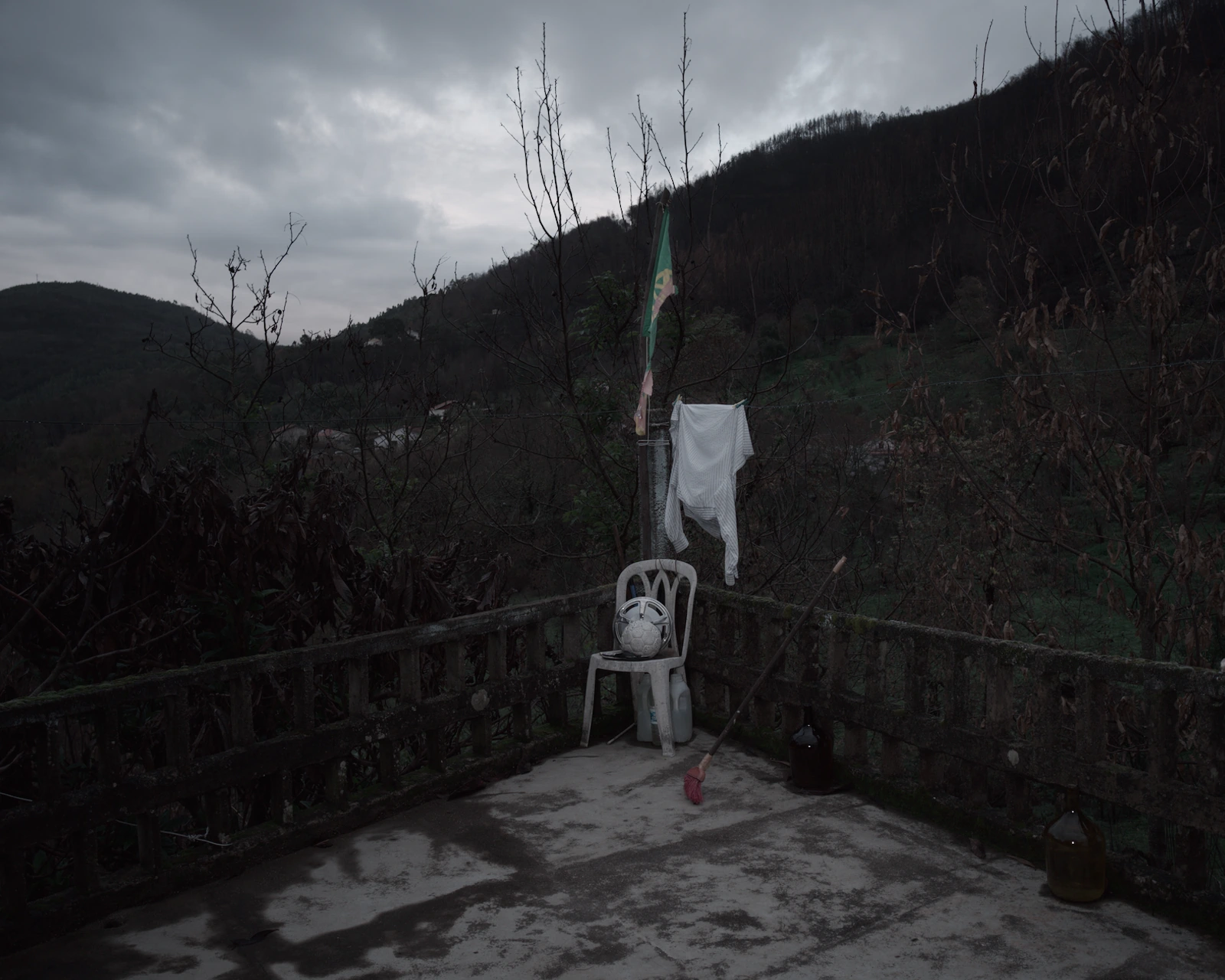
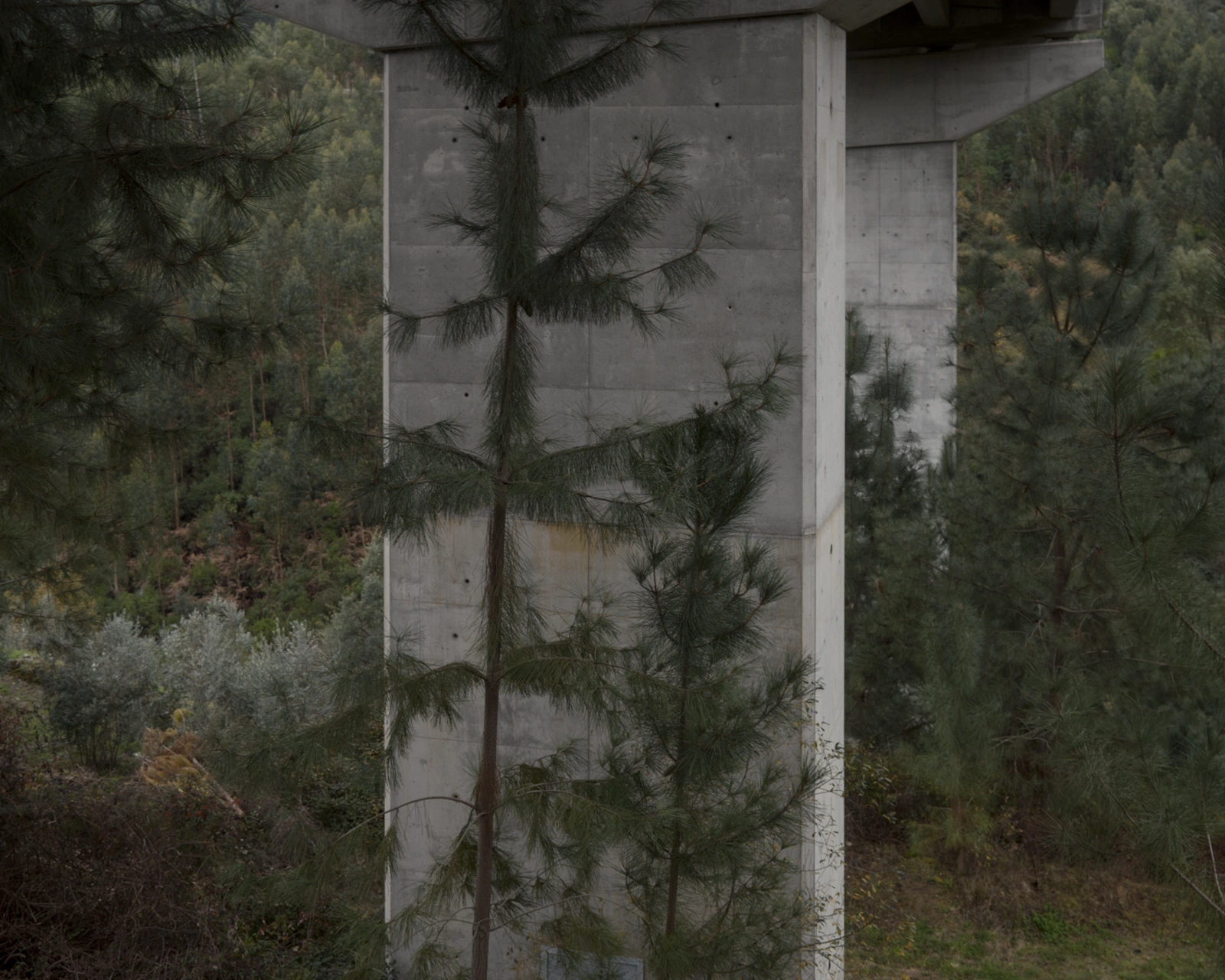
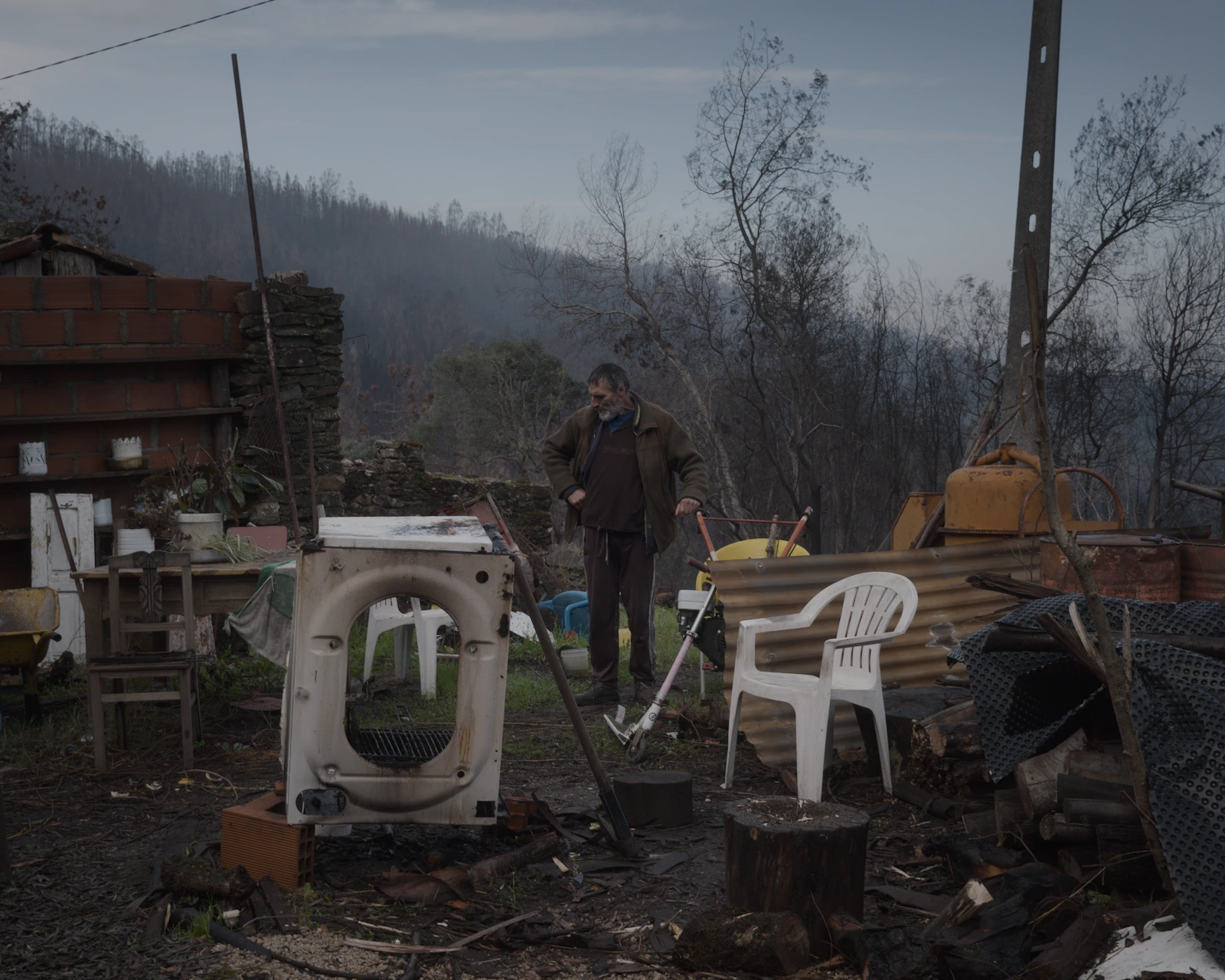
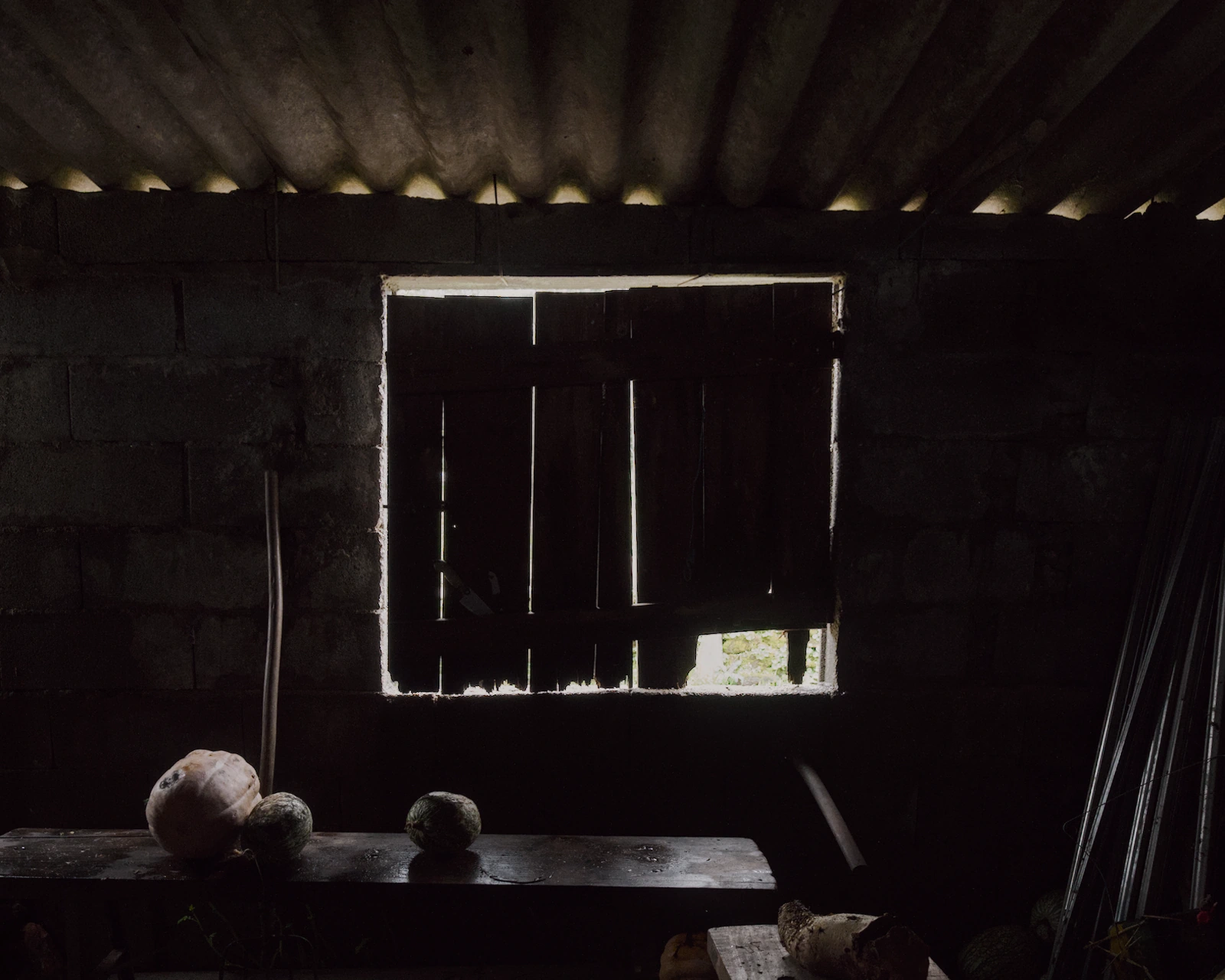
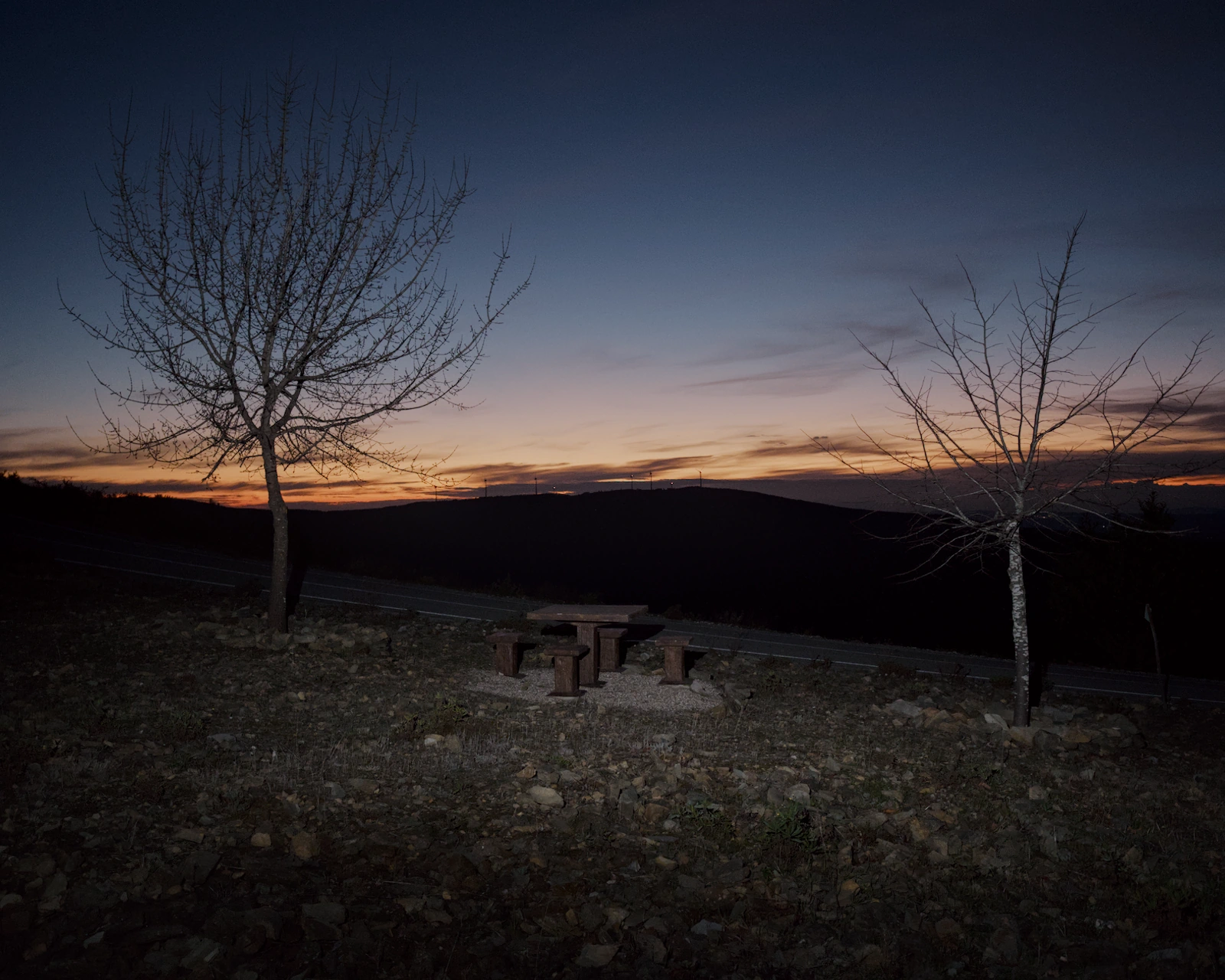
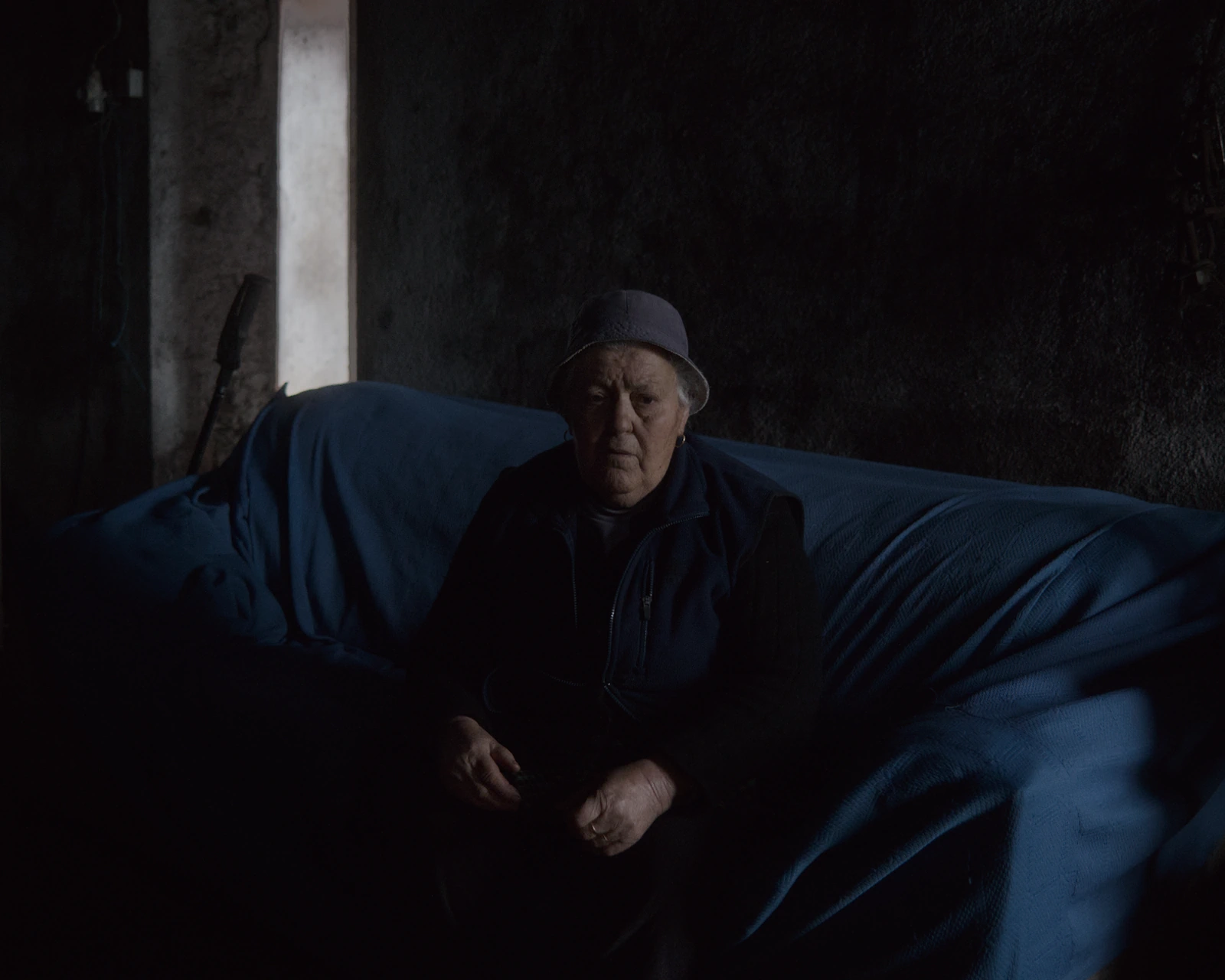
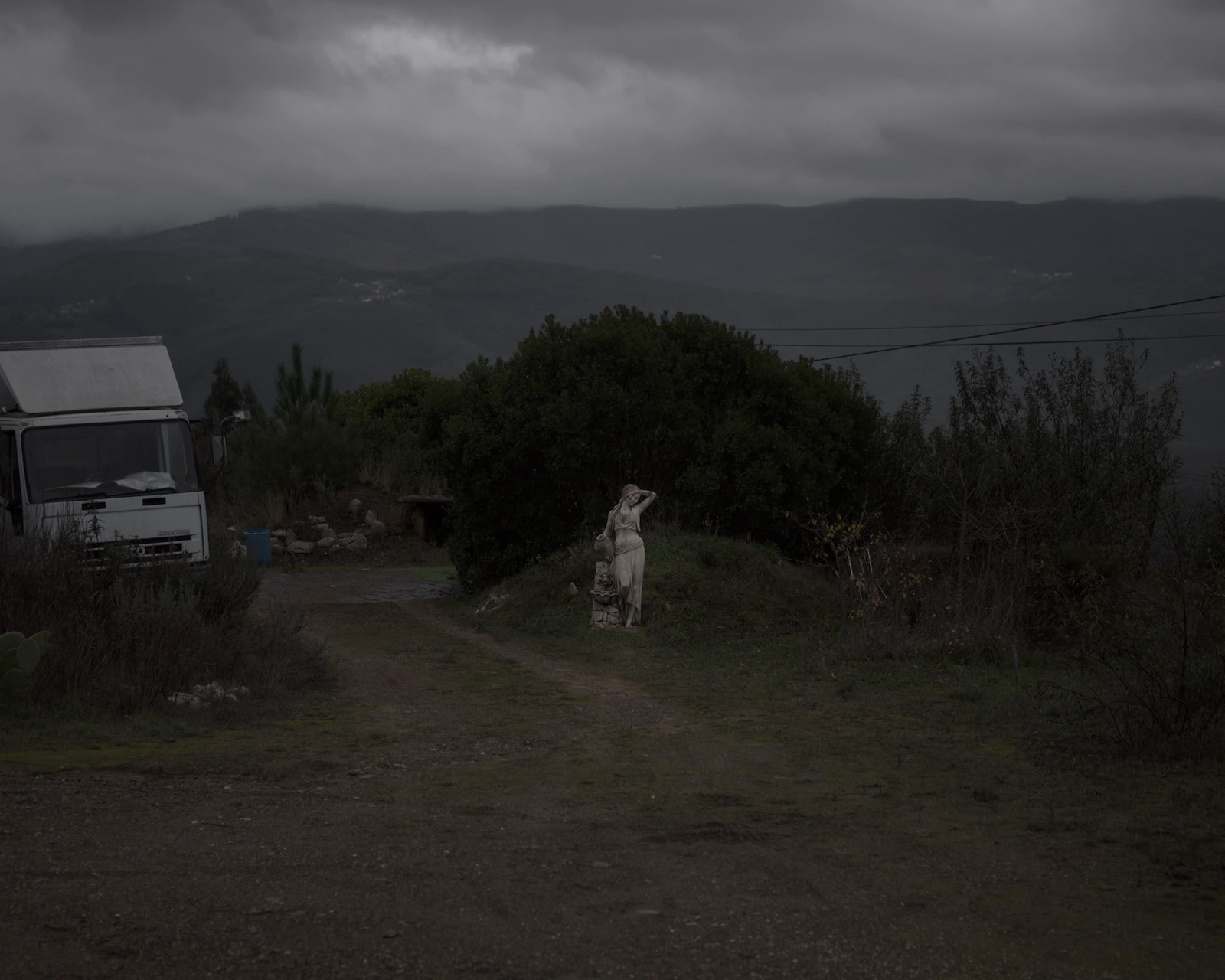
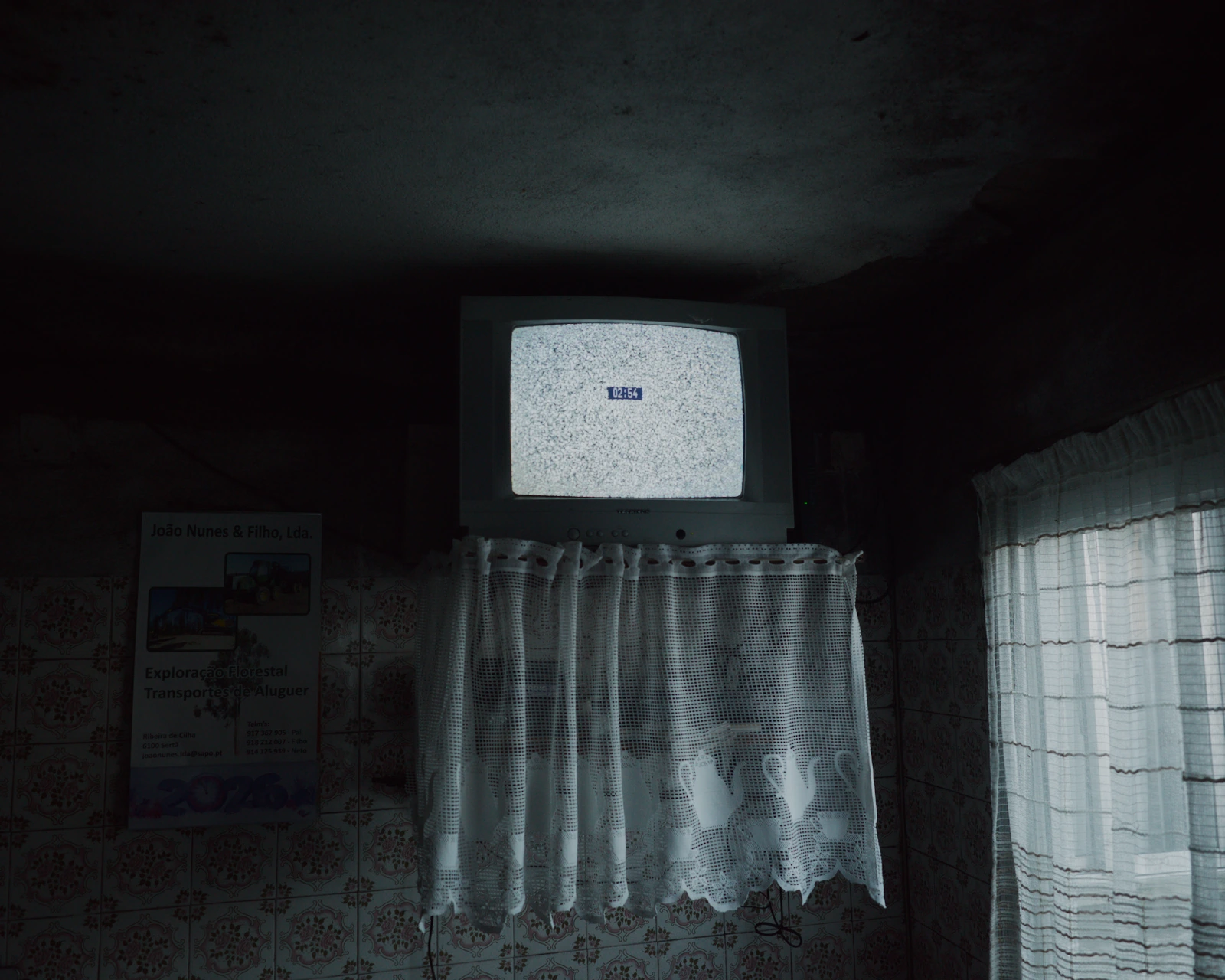
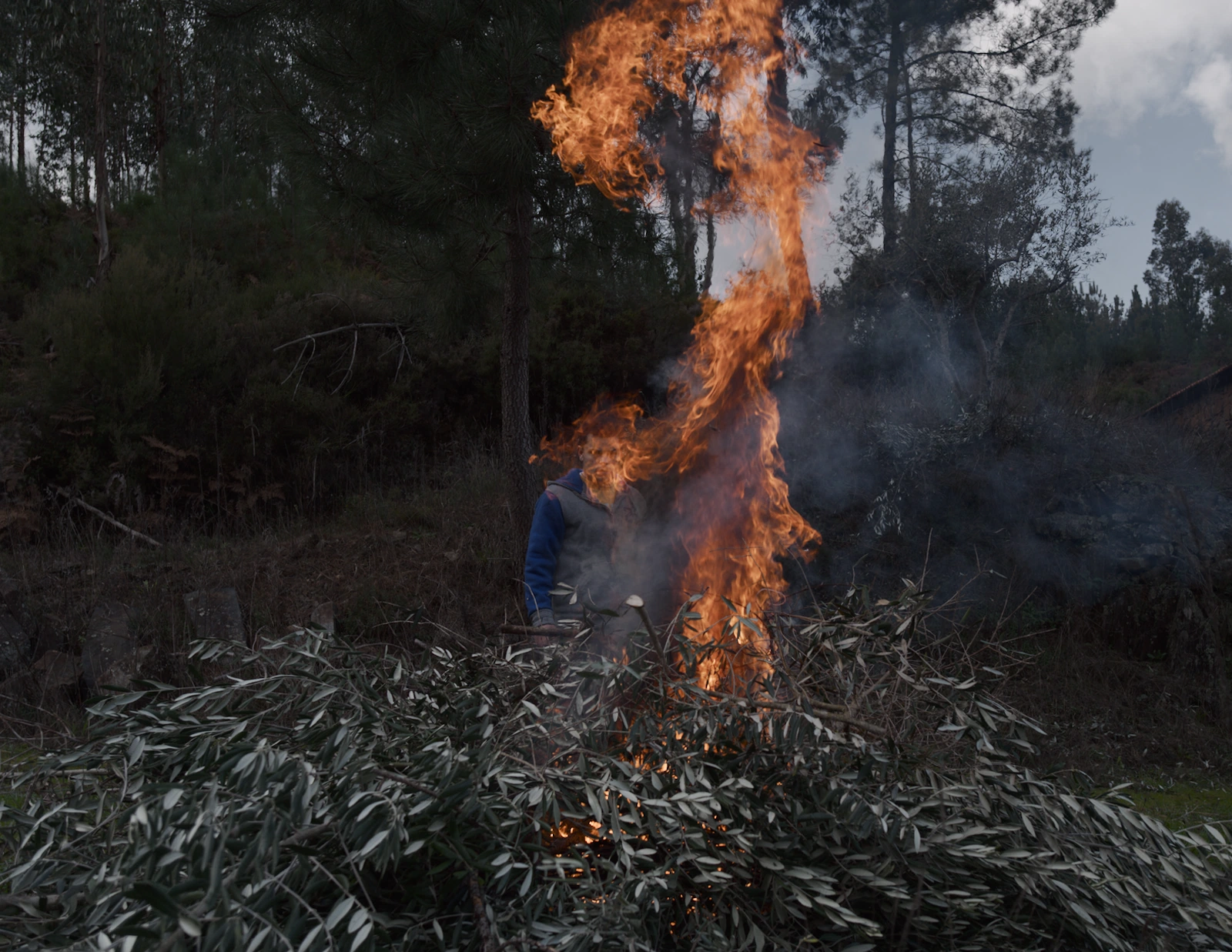
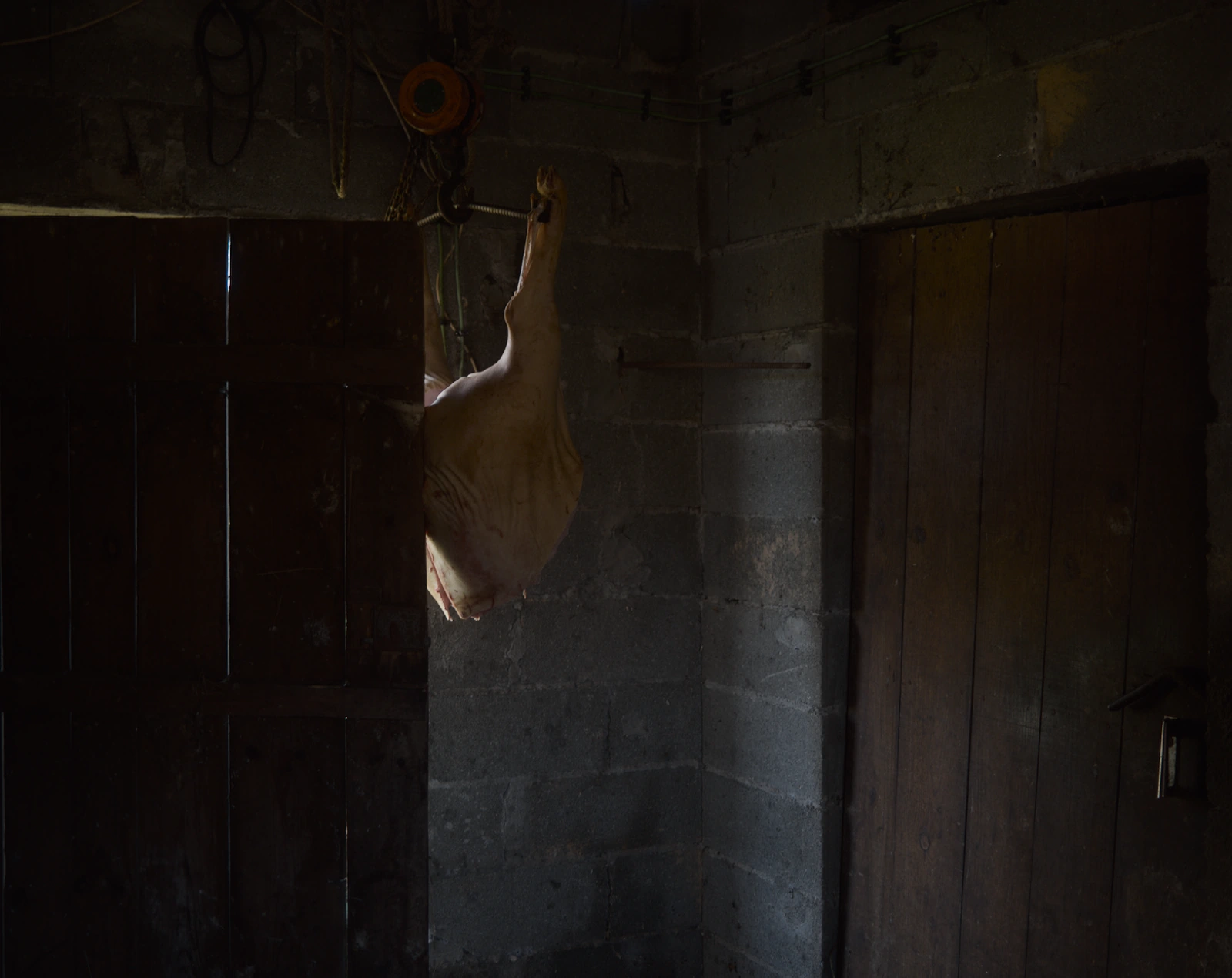
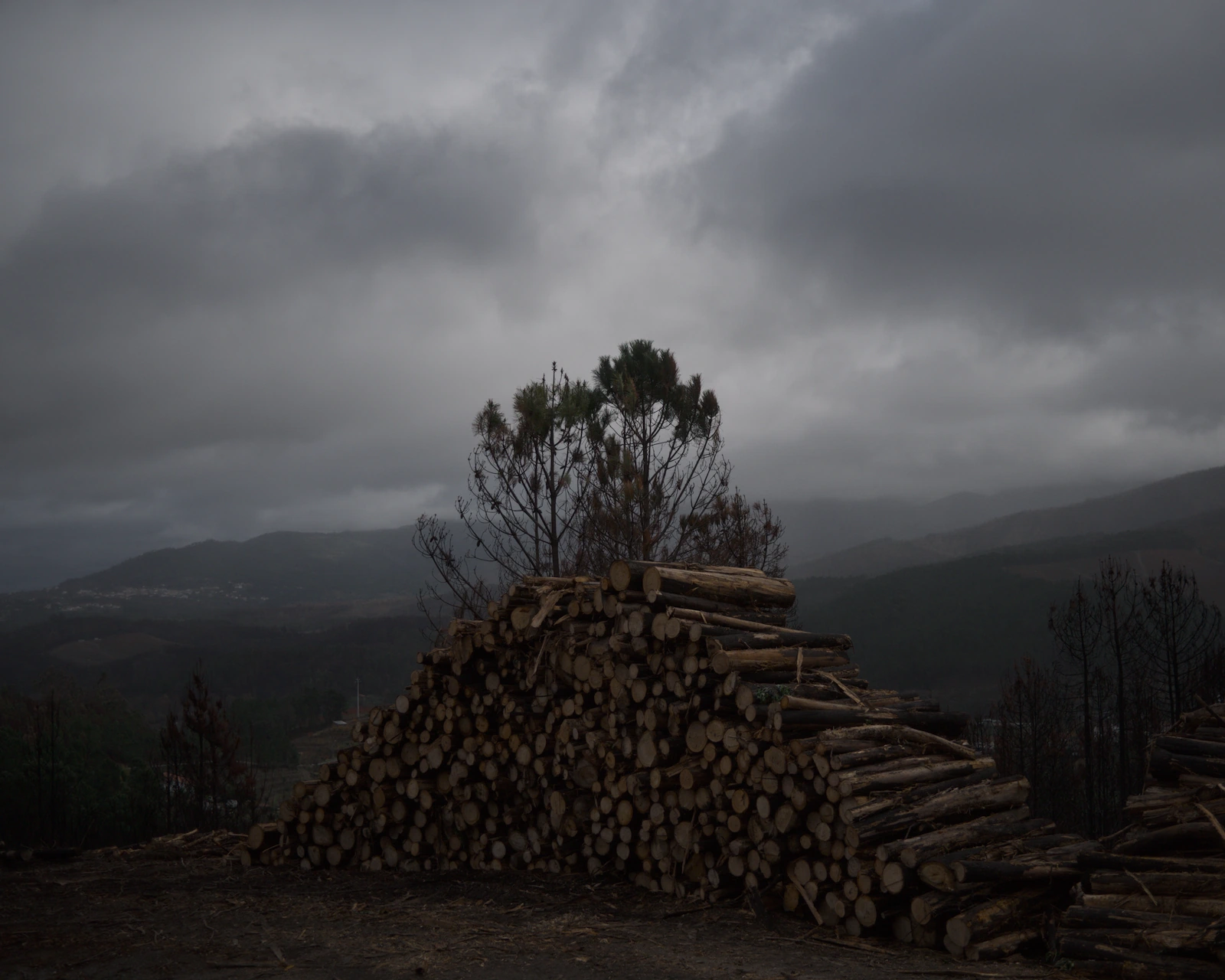
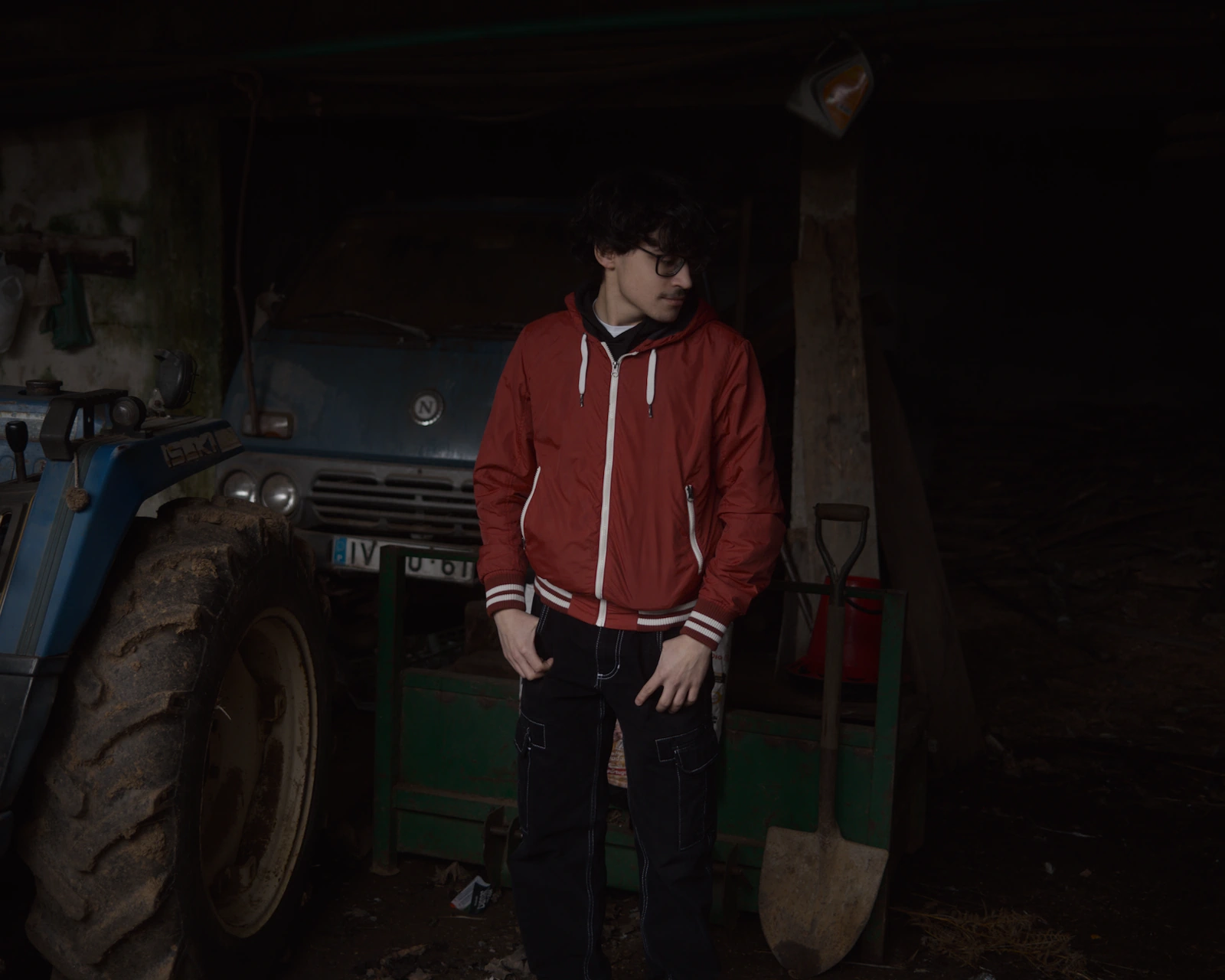
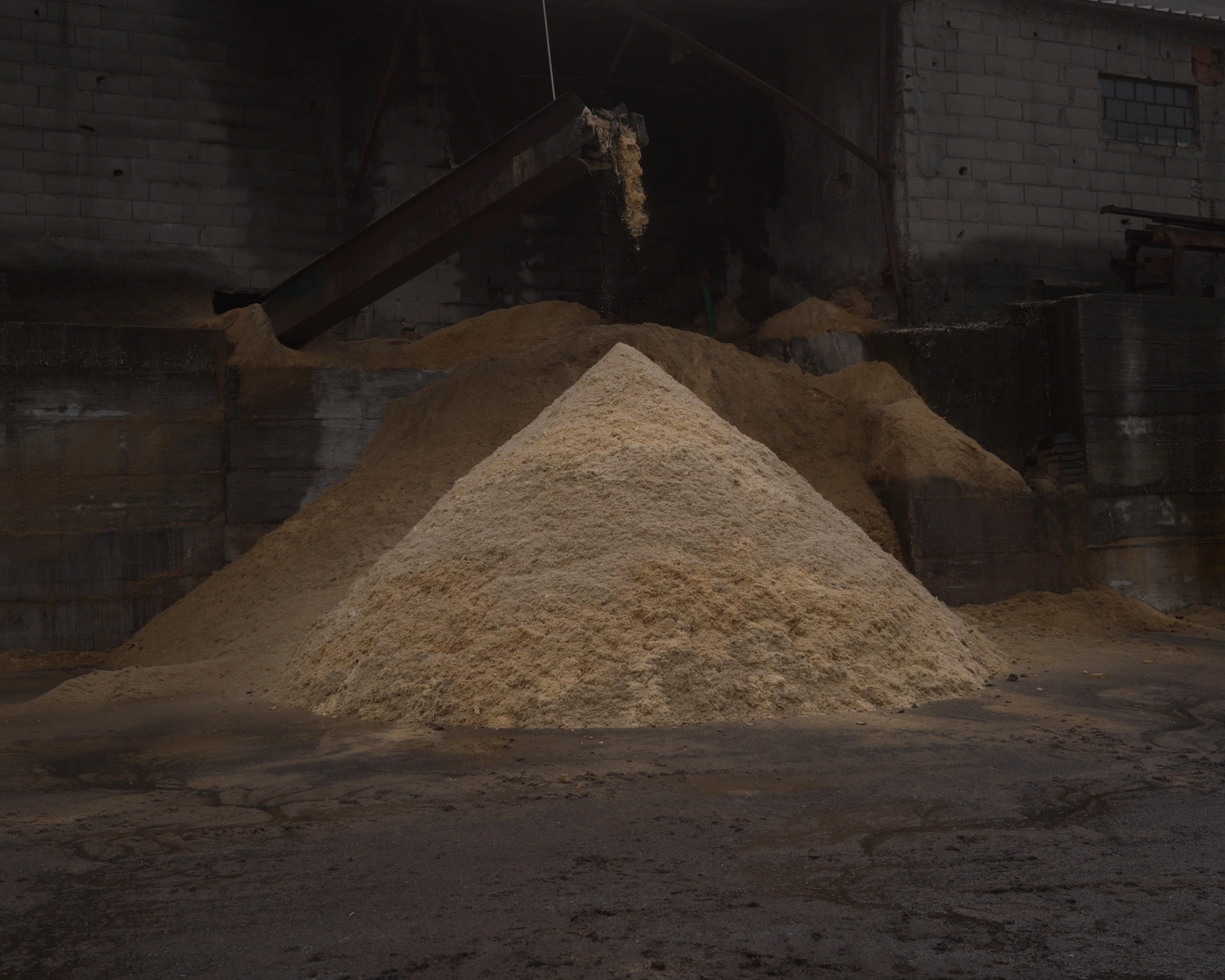
Over four months, I wandered a territory I know well — a stretch of central Portugal’s pine-forested interior — outside the season when anyone pays attention. The cameras only come when it burns. I wanted to see what existed in between: the abandonment, the silence, and a relationship between people, places, and nature in ongoing erosion.
The Pinhal Interior — the pine-forested hills of central Portugal, a region of steep valleys, scattered villages, and dwindling populations — carries a contradiction that’s hard to ignore. The land is named for the pines that once defined it, but eucalyptus, planted for the pulp industry, now covers much of the hillside alongside them. Both burn fast and hot, and fires here are not exceptional events but a recurring fact of life. The same fire that destroys is the one that warms; what threatens is also what sustained generations here. It is a historically poor and overlooked territory, where depopulation and abandonment are not only a daily reality but one of the root causes of the monoculture that turned the 2017 fires into some of the deadliest in European history.
The title comes from the land, from those who stayed and those who left. The winter of extraction, the summer of devastation. I wanted to document that forgotten season of the year, and the people and places that persist through it.